
Robert Habig
Contact
Robert Habig
General Biology I (Lab) BIO160A
General Biology II (Lecture/Lab) BIO161/161A
Principles of Evolution BIO227
Animal Behavior BIO230
Research in Biology BIO370
Research Capstone in Biology BIO460
- Animal behavior research program that centers on three focal study systems: (1) primates; (2) weaverbirds; and (3) coyotes (see below). The overall goal of this research program is to elucidate the underlying evolutionary processes that drive variation in animal behavior within and between species, and shape patterns of social behavior.
- (1) Primates [in collaboration with Shahrina Chowdhury (Brooklyn College) and Larissa Swedell (Queens College)]. Long-term study of primate behavior with a specific focus on the evolution of sociality, dominance interactions, and sickness behavior using two methodologies: (1) multivariate meta-analyses to investigate cross-sectional data across multiple taxa and (2) observational research to answer questions related to social behavior in savanna baboons (Papio spp.).
- (2). Weaverbirds [in collaboration with Jackie Childers (Western Foundation of Vertebrate Zoology] and David Lahti (Queens College)]. Comparative evolutionary analyses of nest construction and reproductive behavior in the weaverbirds (Ploceus spp.). The research addresses two major questions: (1) How do patterns of nest construction and reproductive behavior vary within and between species? (2) How do interrelated evolutionary processes shape variation in nest structure and reproductive behavior?
- (3). Coyotes [in collaboration with Chris Nagy (Mianus River Gorge) and Mark Weckel (American Museum of Natural History)]. Longitudinal investigation of competitive interactions between mammalian species in New York City with a focus on how the expansion of coyotes in the New York metropolitan area are impacting the behavior and conservation of other animals, including red foxes, domestic cats, and songbirds.
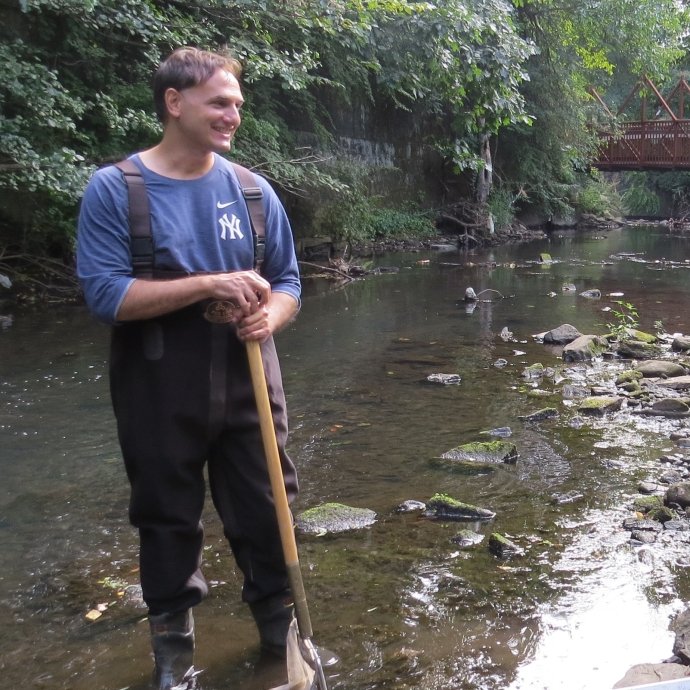
- Urban ecology research program that focuses on the ecological and evolutionary processes that shape patterns of biodiversity in the greenspaces and waterways of the New York metropolitan area. Some of the ongoing projects include: (1) a survey of wild bee diversity in the New York metropolitan area; (2) the impact of urban dams on water quality and biodiversity; (3) how different features of the urban landscape influence mammalian species richness and community composition; and (4) the impact of urbanization on avian species diversity.
- Science education research program [in collaboration with Mandë Holford (Hunter College), Preeti Gupta (American Museum of Natural History), and Jennifer Adams (University of Calgary)]. The research concentrates on two major questions: (1) How and to what extent do informal, STEM outreach programs impact participants’ awareness, interest, and engagement in STEM majors and careers? (2) What aspects of program design are most effective in maximizing impact and broadening participation of underrepresented groups?
Publications
Smith J, Habig B. (2026). The impact of dams on benthic macroinvertebrate diversity in the Bronx River. Cities and the Environment. 19(1), 1-34. https://digitalcommons.lmu.edu/cate/vol19/iss1/2/
Habig B, Geller F, Gupta P, Adams JD, Holford M. (2026). Expanding the realm of possibilities: The role of informal STEM programs in promoting STEM major and STEM career awareness. Frontiers in Education. 10, 1717945. https://doi.org/10.3389/feduc.2025.1717945
Habig B, Bradfield AA, Nagy CM, Weckel M, Lahti DC. (2025). Predictors of coyote occupancy and detection probability in the New York metropolitan area. Urban Naturalist. 82, 1-25. https://www.eaglehill.us/URNAonline2/access-pages/082-Habig-accesspage.shtml
Nath R, Lahti DC, Habig B. (2025). Patterns of mammal diversity and the detection of coyotes and free-ranging cats in the highly urbanized Bronx River. Journal of Urban Ecology. 11, 1-18. https://doi.org/10.1093/jue/juaf007
Bradfield AA, Nagy CM, Weckel M, Lahti DC, Habig B. (2025). Cats in the city: Urban cat distribution is influenced by habitat characteristics, anthropogenic factors, and the presence of coyotes. Urban Ecosystems. 28, 1-16. https://doi.org/10.1007/s11252-025-01709-3
Mahmud M, Lahti DC, Habig B. (2024). The impact of land use and human population density on benthic macroinvertebrate diversity in a highly urbanized river. Cities and the Environment. 17(1), 1-24. https://digitalcommons.lmu.edu/cate/vol17/iss1/5/
Mahmud M, Lahti DC, Habig B. (2023). A longitudinal assessment of benthic macroinvertebrate diversity along the Bronx River. Northeastern Naturalist. 29(4), 415-440. https://doi.org/10.1656/045.029.0403
Raby CL, Cusick JA…Habig B … Fernández-Juricic E. (2022). An inclusive venue to discuss behavioural biology research: The first global Animal Behaviour Twitter Conference. Animal Behaviour. 187, 191-207. https://doi.org/10.1016/j.anbehav.2022.02.015
Bradfield AA, Nagy CM, Weckel M, Lahti DC, Habig B. (2022). Predictors of mammalian diversity in the New York metropolitan area. Frontiers in Ecology and Evolution. 10, 903211. https://doi.org/10.3389/fevo.2022.903211
Goldstein A, Lahti DC, Habig B. (2022). Avian diversity and land use along the Bronx River. Urban Naturalist. 50, 1-20. https://www.eaglehill.us/URNAonline2/access-pages/050-Habig-accesspage.shtml
Habig B, Gupta P. (2021). Authentic STEM research, practices of science, and interest development in an informal science education program. International Journal of STEM Education. 8(57), 1-18. https://doi.org/10.1186/s40594-021-00314-y
Habig B, Gupta P, Adams JD. (2021). Disrupting deficit narratives in informal science education: Applying community cultural wealth theory to youth learning and engagement. Cultural Studies in Science Education. 16, 509-548. https://doi.org/10.1007/s11422-020-10014-8
Habig B, Chowdhury S, Monfort SL, Brown JL, Swedell L, Foerster S. (2021). Predictors of helminth parasite infection in female chacma baboons (Papio ursinus). International Journal for Parasitology: Parasites and Wildlife. 14, 308-320. https://doi.org/10.1016/j.ijppaw.2021.03.01
Habig B. (2020). Practical rubrics for informal science education studies: (1) a STEM research design rubric for assessing study design and a (2) STEM impact rubric for measuring evidence of impact. Frontiers in Education. 5, 554806. https://doi.org/10.3389/feduc.2020.554806
Levy EJ, Zipple MN…Habig B… Altmann J, Alberts SC, Archie EA et al. (2020). A comparison of dominance rank metrics reveals multiple competitive landscapes in an animal society. Proceedings of the Royal Society B. 287, 20201013. http://dx.doi.org/10.1098/rspb.2020.1013
Gesquiere LR, Habig B, Li A, Freid K, Hansen C, Learn NH, Altmann J, Alberts SC, Graham AL, Archie EA. (2020). Non-invasive measurement of mucosal immunity in a free-ranging baboon population. American Journal of Primatology. 82(2), 1-15. https://doi.org/10.1002/ajp.23093
Habig B, Akinyi M, Jansen D, Gesquiere LR, Alberts SC, Altmann J, Archie EA. (2019). Multi-scale predictors of parasite risk in male savanna baboons (Papio cynocephalus). Behavioral Ecology and Sociobiology, 73(10), 134. https://doi.org/10.2989/00306525.2019.1590475
Habig B, Khan K, Lahti DC. (2019). Behavioural analysis of Village Weavers Ploceus cucullatus in an Ethiopian breeding territory during incubation: 1. Females. Ostrich: Journal of African Ornithology. 90(3), 223-231. https://doi.org/10.2989/00306525.2019.1590475
Khan K, Habig B, Lahti DC. (2019). Behavioural analysis of Village Weavers Ploceus cucullatus in an Ethiopian breeding territory during incubation: 2. Males. Ostrich: Journal of African Ornithology. 90(3), 233-239. https://doi.org/10.2989/00306525.2019.1616231
Akinyi MY, Jansen D, Habig B, Gesquiere LR, Alberts SC, Archie EA. (2019). Costs and drivers of helminth parasite infection in wild female baboons. Journal of Animal Ecology. 88(7), 1029-1043. https://doi.org/10.1111/1365-2656.12994
Habig B, Gupta P, Levine B, Adams JD. (2018). An informal science education program’s impact on STEM majors and STEM career outcomes. Research in Science Education, 50(3), 1051-1074. https://doi.org/10.1007/s11165-018-9722-y
Habig B, Doellman M, Olansen J, Woods K, Archie EA. (2018). Social status and parasitism in male and female vertebrates: A meta-analysis. Scientific Reports, 8(1), 3629. https://doi.org/10.1038/s41598-018-21994-7
Habig B, Chiyo PI, Lahti DC. (2017). Male risk-taking is related to number of mates in a polygynous bird. Behavioral Ecology, 28(2), 541-548. https://doi.org/10.1093/beheco/arw187
Habig B, Archie EA. (2015). Social status, immune response and parasitism in males: A meta-analysis. Philosophical Transactions of the Royal Society of London B: Biological Sciences, 370(1669), 20140109. https://doi.org/10.1098/rstb.2014.0109
Habig B, Lahti DC. (2014). Heterospecific intrusions, synchronous fleeing, and nest attendance in a weaverbird colony. Journal of Ornithology, 156(2), 551-555. https://doi.org/10.1007/s10336-014-1144-7
Book Chapters
Blanchard MR, Gutierrez KS, Habig B, Gupta P, Adams J. (2020). Informal STEM Program Learning. In C Johnson, M Mohr-Schroeder, T Moore, L English (Eds.), Handbook of Research on STEM Education. Routledge/Taylor & Francis.